Sunday, March 15, 2015

Subjects Matter: Chapters 4 and 5

           While reading Chapter 4 of Subjects Matter I knew from when I first read about easycalculation.com that it was going to be one of my favorite takeaways from this chapter.  In the part of the website the book recommends there are shortcuts, tricks, ancient numerals, and genuinely interesting things you can do with math.  This site is definitely a resource I would use in my classroom.  I have always been a fan of number theory and the history of math and I think that the topics are extremely engaging because of how surprising, useful, (and even cool!) they are.  This is one of a few times while doing this reading that I was reminded of Dr. Kraus’ lessons on games in the classroom in SED406.  We learned that while it is nice to take a break sometimes and do something fun, our activity should still have a purpose and foster learning.  For example, I could hold a class centered on the trick for figuring out what day of the week a given date from the past was.  I could preface the lesson by showing a clip out of one of my favorite Ted Talks: Arthur Benjamin: A performance of "Mathemagic".  There is a piece in the segment where he very quickly figures out that June 6, 1824 was a Sunday. After watching that, we could go over and practice the trick as a class by picking dates randomly and figuring out what day of the week they were.  The purpose here, besides getting to show a class that math can be fun and giving them something to impress their friends and family with, is to have an engaging lesson where students are actually excited to practice arithmetic.  This kind of practice will certainly help out students all the time in math, since arithmetical processes are constantly worked with.

Here is the Ted Talk if anyone wants to watch it.  The whole thing is 15 minutes, but it is definitely entertaining and impressive.

            Another point from Chapter 4 that got me thinking was how teachers of every subject should build a classroom library.  Having varied and interesting books for students to read is great even in a math classroom.  After getting suggestions for fun books from students I could even start to sneak in some math books that fall outside the traditional high school subjects for the particularly daring math lovers.
            After reading Chapter 5, I definitely agree that it will be a useful resource in the future.  There are tons of suggestions for strategies all revolving around the “gradual release of responsibility”.  This is certainly a chapter that I will be able to return to over and over again in the future to get more ideas, or even take ideas I might have and turn them into a structured classroom event.  While all of the suggestions are good reading strategies, I thought of ways that you could tweak a few of them to turn them into computational strategies as well.
            The first strategy I really liked was Vocabulary Predictions.  This is very in line with an idea that I wrote about in Dr. Brell’s class that would be used while teaching geometry.  To engage history lovers or students who might not warm up to math very quickly, I could run a geometry class in the style of how geometry was studied in Ancient Greece.  In our class we would not work from the definition to the term, but create our own definitions from the term, concept, or idea just like the Greeks did.  As a class we discuss all the aspects of a line for example and try to create a really polished definition.  We stick with our definition and continue crafting more geometrical results from it.  As we continue the unit, we can go back and revise definitions if we run into contradictions.  I think this would be a great way to have the concepts stick in the students’ heads.  The students will have created their own definition, worked with their creation, and then realized what about it did and did not work.  The last part is what I believe is most important and is what will help them remember the details of geometry. 


 All the students know what a line is, but instead of just telling them that in geometry a line is straight, has no thickness, and extends infinitely in both directions, why not challenge the students to figure that out?  This could be a scaffolding exercise where they use all their background knowledge about lines and points and make a prediction about which of the characteristics of a line will be most important and truly shape what a line is.

            Another great strategy for a math class is multi-column notes.  This is also one that can be adapted to work for more than reading a text.  I have already used this method for demonstrating mathematical processes and I think that it works really well for students.  It also makes it very easy to look back at notes from a while ago and be able to immediately recognize everything that is going on.  Here you would put all the steps of an algebra problem on the left hand side of the page and then write out in words what happened at each step and why that action was taken on the right hand side.  One of the most frequent questions in a math class is “How did you go from A to B?”  Using these kinds of notes should cut down on that kind of confusion immensely.
            The last strategy I will discuss is the use of exit slips.  I think this is a fantastic feedback system for shy students or students who feel they would be embarrassed to have the rest of the class know they did not understand something.  After a geometry class where we read about different definitions and their interactions, or even get into some proofs, students could take the last three minutes of the class to say what they learned, where they didn’t understand the connections, or what they thought our lesson today was leading up to.  All of this feedback is useful for the students and for myself.  The students take accountability for what they did and did not understand and now that they have this self-realization they can take actions to improve their learning.  I can also take accountability for what might have been unclear to the students.  This feedback can alter my next lesson and help me to realize what I need to focus on to get everyone on board with the material.  It also helps me to see the connections students are or are not making and I can choose to emphasize these when appropriate.

            This has been another reading that further convinces me of the importance of reading strategies and comprehension in a math classroom.  Being able to demonstrate to the students how to read the text and then work them up to being able to read properly all on their own is crucial.  There are so many strategies I did not discuss that I could use to improve the students’ confidence when reading a math text like Coding Text, List Group Label, Partner Reading, Turn and Talk, a Word Wall, and RAFT essays that I feel like I will have plenty of different lessons to try and refine when I begin teaching.  I am pretty excited to be able to try some of these and start to bridge the gap between reading and math in my classroom.

Saturday, February 28, 2015

CRAFTing Mathematics

This reading on using CRAFT as a guideline for creating powerful and interesting writing assignments has really made me start thinking about all of the uses for writing within a mathematics course.  I like the main principles of the idea.  Giving the students a purpose for their writing beyond that fact that it will be graded definitely makes sense as a motivator.  Also creating some kind of personal investment for the student in the project will motivate them to give their best work when otherwise they might be satisfied with just slapping something together that’s good enough.  Working on writing assignments in a math course was not something that I was ever exposed to, so before now I had honestly not given it much thought.  Outside of formal proof writing, which is only encountered at the college level, it is pretty abnormal to be writing more than a few words or a line of justification for any given mathematics problem.  I now have some ideas on how to use CRAFT in math courses as ways to facilitate interdisciplinary learning, provide alternative summative assessments, and differentiate content.
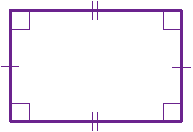
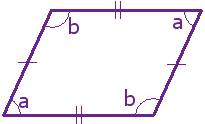
            The opportunities for interdisciplinary assignments using the CRAFT writing formula are virtually limitless.  I especially enjoyed reading about Sarah Gale’s writing assignment on parallelograms described on pages 99 and 101 in our reading.  Knowing which shapes fall under an umbrella term such as a parallelogram is a part of every geometry class, and it is something that is tested by the SAT’s and other standardized tests.  I had the fortunate experience to be a long term substitute for a geometry class last year and one thing I noticed was that the students did not view any of the shape names as umbrella terms.


Students get into the habit of thinking the shape on the left is a rectangle, the shape on the right is a parallelogram and that is that.  But looking a little closer  we can see how a rectangle has all the same characteristics as a parallelogram.

The students nor the teacher are to blame, as this compartmentalization of knowledge is something we are all guilty of at times.  A writing assignment such as Sarah Gale’s breaks down all those barriers and forces the students to look at the shapes in a greater context, a practice that is strongly aligned with the concepts of UbD.  In this assignment, students are practicing their writing skills, their persuasive argument skills, and their proof writing skills.  Interestingly, the students might not even notice they are practicing proof writing.  This assignment gives students who usually do not enjoy mathematics courses or struggle with all the numbers to complete an assignment more enjoyable to them and give them a good opportunity to show what they have learned in a comfortable environment.  This reminds me of the speech Dr. Chris Emdin gave at Promising Practices last year.  He gave us an example of a student who could make up a rap about everything they learned in a science class, but if you gave him a multiple choice test on the same content he would fail.  This really stresses the importance of using different assessment styles so every student has the same opportunity to demonstrate what they know.
            All of this started me thinking about how CRAFT is a good tool to use in a unit created by practicing UbD.  Staying with the parallelogram example, if the goal of a unit on quadrilaterals is for students to be able to identify the characteristics of the different shapes, then why give them the standard math test when something like Sarah Gale’s writing assignment could also assess their knowledge?  Students can memorize and then forget how to solve a question like the following:


The length of AC=5x+6.  The length of AE=10.  Solve for x.

But having a student write a convincing argument about why the diagonals of a rectangle bisect one another is something they are less likely to quickly forget.  Practice with the type of problem above is still absolutely necessary, but two pages of solving for x does not have to be the “be all end all” for assessing knowledge in math courses.  It also makes sense that if students are able to craft that writing argument they will be more likely to correctly apply what they learn to perform calculations.
            The strategies in this reading also appear to be a great way to differentiate content in a way that helps students who struggle in mathematics meet the same standards as the rest of the class.  The first time a student ever sees a two column proof is when they start studying geometry, and this is usually the hardest part of the course for any student.  It certainly was the hardest part for myself and my friends in high school, and I have seen current high school students dread the thought of having to prove something as I have been subbing.  Having to try to figure out the application of new material, while working in an unfamiliar format is a recipe for disaster for some students.  For these students, why not set up all their proofs in the format of a CRAFT writing assignment?  I could have them explain why a theorem in geometry is true to someone who is unfamiliar with geometry.  After all this is the point of a proof.  Once students have an explanation and understand why it works, they can be eased in to writing it up in the two column proof format. 

            Finally I will definitely want to use the style of rubric shown in the reading as well.  When a student is worried about if they are doing an assignment the way the teacher wants it they are much less likely to produce a quality product.  With all of the examples given, I could see exactly what was wanted and what was expected, so as the student I could focus all of my energy on researching the information necessary and creating a compelling piece of writing.  I did not expect to get as many good ideas as I did from a reading on writing assignments as someone who will be teaching math, but I am really glad I did.  I can see how CRAFT assignments have a place in every classroom and how they can be an excellent tool for engaging students who might otherwise want to distance themselves from the content being learned.

Saturday, February 21, 2015

Central Falls Scavenger Hunt

Is there a post office in town?

Yes, the post office is at 575 Dexter Street and I went by it on my way through Central Falls.


Visit the Central Falls Library.  What events and resources are available?

There are many things offered by Adams Memorial Library.  They have 21 computers for free public use that have Microsoft Office and Rosetta Stone.  There are DVDs and CDs to borrow for free in English, Spanish, and Portuguese.  Every Thursday at 11:00am there is a story time for preschool age children.  They also offer homework help for students.  There are test prep books, ESL, and large print books.  The auditorium can be reserved for group use.  A knitting group and a board game group also meet regularly at the library.

A world famous artist, kings and presidents sat for him.  At the beginning of "Saving Private Ryan" this artist's portrait of FDR can be seen in the background.

This man is Lorenzo de Nevers.  He was born in Quebec, Canada in 1877 and moved to Central Falls in 1896 with his family.  He also studied drawing for some at the Rhode Island School of Design.

There are three professional baseball players from Central Falls. Name them.

The three pro baseball players are Max Surkont, Charley Bassett, and Jim Siwy.  Surkont was a pitcher who played for eight years from 1949 to 1957.  He played for the White Sox, Braves, Pirates, Cardinals, and Giants.  Bassett was an infielder who played from 1884 to 1892.  He played for the Providence Grays, the Kansas City Cowboys, the Indianapolis Hoosiers, the Giants, and the Louisville Colonels.  Siwy was a pitcher as well and played for the White Sox in 1982 and 1984.

Becoming wealthy during the Gold Rush of 1849, she remembered her hometown and donated $50,000 to build the most recognizable feature in the city.  Everyone knows who she is and can see her donation... time after time.

This is Caroline Cogswell.  The money she donated built the Cogswell Tower which is located in Jenks Park.  I made it to the entrance of Jenks Park, but unfortunately not to the tower because of all the snow.

Are there public parks?

Yes, there are actually several public parks and playgrounds located in Central Falls.  Among them are Jenks Park, the River Island Campground, Pierce Park, Lewis and Hunt Park, and the Garfield Street Playground.

Is there a movie theater in town?

There used to be some, but it seems they have closed.  The Holiday Cinema and Bellevue Theatre both shut down a long time ago.

The first mayor looks down from his perch as students come into the school.

This is Charles Moies who was elected as the first mayor of Central Falls after the city's government was organized on March 18, 1895.

How many schools are in the city?  Colleges and Universities?

There are 9 total schools in Central Falls.  Captain Hunt Early Learning Center, M.I. Robertson Elementary School, Ella Risk Elementary School, Veterans Memorial Elementary School, Calcutt Middle School, and Central Falls High School, the Alan Shawn Feinstein School, the Segue Institute for Learning, and the St. Elizabeth Ann Seton Academy.  There are no colleges or universities in the city.

Where is the satellite office of one of the oldest Child Welfare agencies in the city?

The Central Falls office of Children's Friend is located at 621 Dexter Street.  Children's Friend is a non-profit organization founded in 1834 and they help over 30,000 families each year.

In this sacred space, the famous and the infamous are side by side.  But in one part you can see the bullet holes left by a battle that took place between strikers and the National Guard.

This place is the Moshassuck Cemetery.  Part of the Battle of the Gravestones took place here.  It was a fight between the textile workers at the Sayles Bleachery and the National Guard.  When the picketers who wanted to shut down the factory started throwing rocks at the guard retaliated.  The combatants dispersed into the nearby Moshassuck Cemetery where both sides used the gravestones as cover as guns were fired.  The bullet holes can still be seen in some of the graves.


I learned a lot about the town of Central Falls through this scavenger hunt.  For such a small area there is a lot of history and places to discover.  Some of the questions were much more difficult than the others, and I realized how much of the information is not easily accessible.  There might be many educational opportunities here, if the students themselves don't know the interesting culture of their own town.When talking about the mills in the industrial revolution and the conditions that workers faced, the class could travel over to the battle site at Moshassuck Cemetery.  This would be a lot more interesting than just reading the history book for a class.  A potential project could involve learning about Caroline Cogswell and her tower, or the history behind Jenks Park and the Jenks family.  Projects like these remind me of Daniels' and Zemelman's story about Best Practice High School.  The students are getting out of the classroom, learning about something that impacts that lives, and seeing their community in a whole new way.
Having done this scavenger hunt after one of our many blizzards this year, I realized how tough the people living there have it in the winter.  Entryways and sidewalks aren't shoveled, the snow is piled wherever, and streets are barely plowed if at all.  We all complain about the snow, but these are the people it is really impacting.  
Some of the things I'm now questioning have to directly do with the students of Central Falls High School.  Now that I know that there are parks in the city, is that where the kids go to relax?  Or do they just want to get out of the city when they have free time?  Seeing that many of the people walk everywhere, do some of the students have cars?  Are they able to go and do some of the things we consider "normal" for high schools students, like see a movie on a Friday night?  When you don't really know anything about a place, you don't have any questions.  But when you just begin to learn about somewhere all the questions start to appear.  I think all these questions tie into what an efficient teacher at Central Falls High School would look like.  To best meet the needs of your students, you need to know who your students are.  You need to know what they do for fun, what their home situations are like, what interests them, and what they do and do not have access to.  When I get my first teaching job which will probably be in a new town and even a new state, I think it will be important to use the first summer before the school year to become as much a part of that new community as I can.  I need to be able to relate to the students and the students need to be able to relate to me, before we can build a relationship in the classroom.  A good relationship that leads to a positive and safe classroom environment is one of the most important foundations for learning to take place.  Unless a student feels safe and comfortable in their classroom, they will be worried about other things and not be able to engage themselves in a lesson no matter how interesting it is.

Sunday, February 15, 2015

Understanding by Design

      The idea of Understanding by Design as a curriculum framework is an appealing one.  Backward Design makes a lot of sense when you read about it.  How can you start a journey if you don’t know your destination?  I was first exposed to this concept in SED 406 with Dr. Kraus and I had the opportunity to practice it that semester.  I designed a Calculus unit on limits and the first thing that was done was a unit outline.  Here we described our goals for the unit, an essential question, and what content standards we working towards.  Having the goals in mind, and knowing what I wanted the students to take with them from this unit to the next was very helpful when starting the next step of the project, which was creating the final assessment for the unit.  Then again having that test made and knowing exactly what the students would need to answer was a great benefit when creating the rest of the unit.  My examples and practice problems were designed to get the students familiar with the same problem types that would appear on the final test.  It was also very easy to make sure I didn’t leave an important point out of any lesson because I could always go back and reference the test.  If I had tried to start at day one of the unit and work through all the lessons and made the test last, I’m sure I would have had to do a lot more work going back and filling in things I left out.  This experience had led me to believe that this might be the best design option. 


            The reading’s reminders to focus on making the unit cohesive resonated with me as well.  With only 180 days in a school year there is too little time to be doing things simply because they are fun or because the students will be engaged.  The real challenge is crafting the engaging lessons out of the essential content. 
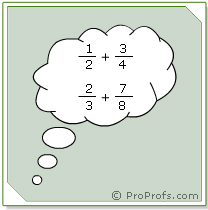
            The other important point to focus on is presenting new material in a way that relates to previously learned material.  Too often in math I find that there is a segmentation of skills.  Students do a unit on fractions for example, and when it is done they think they are done with fractions so they can forget it now.  Usually after working with fractions, middle school students move on to solving their first algebraic equations.  At this point, books will return to just using integers while introducing this new skill.  I think this goes against what we should be doing.  I have already heard from students way too many times, "You can't solve this equation, it doesn't divide evenly".  The students just learned fractions, so why not show them that this new skill has some use by having lots of fractions in the equations right away?  I think this kind of practice would help move the students towards that goal of “understanding” that these readings focus so heavily on.  I also believe it would prevent students from seeing these two units as separate entities, and a continuation of this practice would show students how every subject in math is closely related.

We quickly go from this:


To this:

And the disconnect between working with fractions and "doing algebra" begins.
          
       For me, the most interesting part of this reading was Module F on essential questions.  Even though I had made an essential question for my unit last semester I was still shaky on the idea of having an overarching question for a math class.  When I began reading this module, I was curious if they would talk about math at all or just stick to subjects like history or English.  Essential questions are supposed to “reflect the key inquiries and the understanding goals of the unit and serve to focus the unit and prioritize learning” (Module F pg. 70). This made me start thinking about what a “key inquiry” in math would sound like.  In the unit I designed, I knew I wanted the students to understand how limits shape our understanding of continuity, be able to calculate them, and see how they allow us to calculate the “slope” of non-linear graphs, i.e. take derivatives.  What I didn’t see is how this could be an inquiry.  It is a skill that can be used and a form of comprehension, but how can we have a debate about limits?  They are either right or wrong and their uses have already been established and proven.  I was glad that this issue was addressed in this reading.  The author talks about essential questions in a skill area.  Here essential questions are “not about concepts or theory but practical decision making” (Module F pg. 79).  I know now that a better essential question regarding limits could be something along the lines of “When is it appropriate to solve limits analytically to describe the continuity of a function?” or “When are limits not helpful when determining the values of functions?”.  These questions seem to be more useful to the students and result in a long term understanding and a skill they can take with them to future math courses.  Focusing on creating questions that do not just have one right answer, in a subject that is all about finding that one right answer will be challenging, but I am looking forward to practicing this skill so I can best serve my students.  I think that if my students really understand the applications and future uses of what they are learning I might even be able to change some of their minds when it comes to what they think about math.

Monday, February 9, 2015

Interest Inventory


Student Interest Survey

I hope to get to know all of you to make this year as great as it can be.  Please share your thoughts on the following items with me.  Your input will be taken into consideration when shaping how our class is run.


Name:_________________________________________                              Period:_________________

Describe your ideal homework or studying environment.


What types of technology do you have access to, and where do you access them?


Rank from 1 to 4 (1 being most confident, 4 being least confident) how confident you are in completing the following types of math problems.
_____  Algebra problems                                    ______ Geometry problems
_____ Multi-step arithmetic (no calculator)   ______ Graphing linear equations


Describe your typical week outside of school. Include any jobs, sports, hobbies, clubs, or volunteer work.


What was your favorite math class?  What year was it, and what qualities made that class your favorite?


What is a goal you currently have, or something that you aspire to accomplish?


What is something I could do or keep in mind to help you have a successful year?


Sunday, February 8, 2015

Subjects Matter Chapters 1 and 2

The authors, Daniels and Zemelman, immediately make a compelling case for why reading deeply and thoroughly is so important.  The students at Best Practice High School read meaningful articles, understood what they were reading, and created projects which were relevant to their lives and to the lives of others.  This kind of learning reminds me of what Wilhelm talks about in the second chapter of the article we read.  Reading content for a real purpose, not just to be able to answer questions at the end of a chapter, is what inspires students.  Daniels and Zemelman make it a point to remind the reader that inspired students learn and retain the most.  
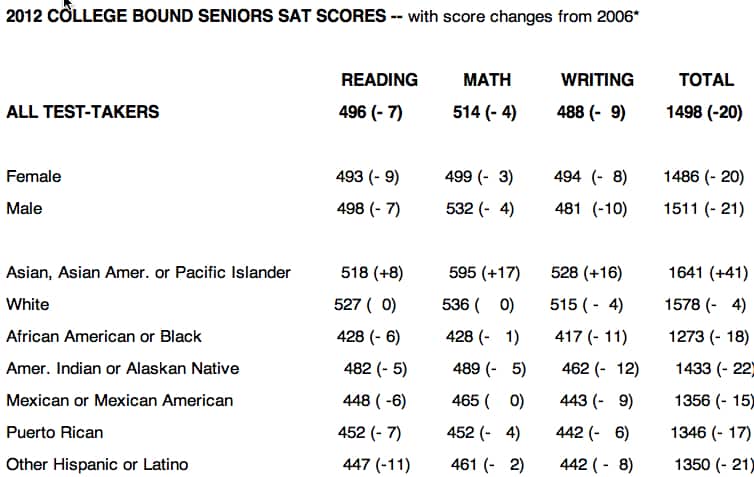
            I’m glad that they go on to talk about the over exaggeration of test scores that has been happening in recent years.  This was a topic that was covered last semester in Dr. Brell’s class and as a mathematician I feel strongly about this issue.  Everyone thinks test scores are going down and that the U.S. is so far behind other countries.  This is simply not the case.  More people than ever are taking the SATs and other standardized tests, so by increasing the test population the scores will stagnate or appear to decline even though students are improving overall.  Just having more students taking the test in the first place should be seen as an improvement regardless of their score because it means more students are motivated to go to college or pursue some other form of post-secondary education.  The authors also mention that if the U.S.’s most well off students are compared with other countries’ students, the U.S. is first in reading.  


This shows SAT scores going down, but what is not shown is a breakdown of the scores by socioeconomic status.  Our country's poorest students earn the lowest scores on the SAT, giving further evidence that poverty is probably the biggest issue in education.


This misconception that the U.S. is falling behind is corrected in Diane Ravitch’s recent book, Reign of Error, and I’m glad these authors are following her example and getting the truth out there.  Another point I appreciated in the first chapter was their critique of the Common Core Standards.  When I first read through the ones for math and other subjects, my initial impression was how dry and robotic they seemed.  The standards are populated by lists of “know this fact” and “be able to replicate this process”.  I like that the authors tell us not to be resigned to just following these lists and to make it a mission to use our content to inspire joy and a love of learning.

            The second chapter, was really eye opening for me, since it has been a while since I was really challenged by a reading.  You tend to forget how reading those stories felt in high school once you have been away from them for several years.  The examples they provided made me think about the students who give up and begin to dislike school because everything is “too hard”.  I think I would feel the same way if I was in their shoes, especially if I was an English language learner.  The chapter is a really effective reminder that we need to provide context for the content.  We need to build off of what they already know so the readings can make sense.  This focus on building the student’s schemata, or webs of prior knowledge, is something that really clicked with me when I read it.  As a math teacher I need to be conscious of what my students already know and what they don’t know.  I have to be careful not to send the students straight into reading a mathematical text.  They need to first be shown the commonly used abbreviations, the style in which theorems and proofs are presented, and then how examples flow in the different subjects.  Once they have a good background and some context from me, they can be more confident in themselves and more successful in their studies.  When the student feels they can succeed they are motivated to do so and that’s when the real learning can start happening.